
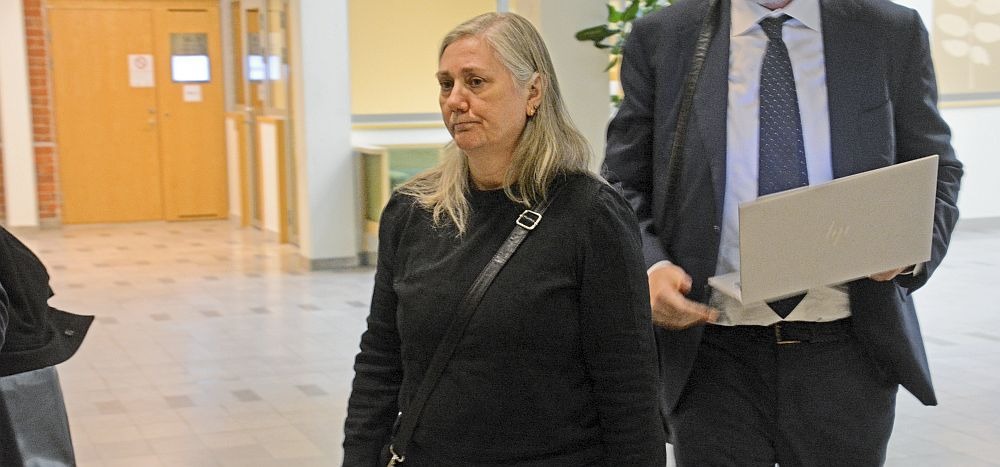
She was one of those dedicated municipal employees on whom Swedish society rests. For decades, since she was hired in the late 1980s, she performed her duties as financial secretary in Solna perfectly. She arrived at work on time every day, lived a socially and financially well-ordered life, and was seen by her colleagues as a reliable cog in the municipal machinery.
Until the bubble burst.
Her name is Ingela, and when this story begins she is 53 years old. Her private life is orderly. She is one of those who blend into the crowd and never stand out in any way.
Read the story in Swedish here
But in Ingela’s secret life, great drama is unfolding. In 2018, she is contacted via her Instagram account by someone claiming to be the British rock icon Mick Jagger, known since the early 1960s as the frontman of The Rolling Stones.Why would the world-famous Mick Jagger contact her and fall in love with her? Ingela doesn’t ask herself that question. She is flattered and delighted.
To those of you who read my blog and learn things you don’t hear in the mainstream media: If you appreciate my journalism and podcasts, please support me with a donation.
Swish: 123 519 92 86
Bankgiro: 111-9072
Warm thanks for your support!
The contact develops into what Ingela perceives as a “romantic relationship”. From the outside, it meets all the criteria for a romance scam. More than 100 romance scams are reported to the police each month, but the real figure is considerably higher, as many victims feel ashamed of having been deceived and choose not to report it.
After four months, “Mick Jagger” starts asking Ingela for money
The relationship between Ingela and the person she believes is Mick Jagger takes place exclusively via text messages. No calls and no pictures. She genuinely believes that the rock icon just wants to be with her.
About four months into the relationship, “Mick Jagger” – who in reality is a billionaire – begins asking for money so he can leave his wife. He claims that his wife has frozen his accounts, and without money he cannot get a divorce.
He promises she will get the money back
Ingela is overcome with sympathy for poor Mick and wants to help him remove the obstacle to the relationship she believes they have. She transfers money from her own funds to various foreign accounts indicated by “Mick Jagger”. He promises that she will get the money back, and she believes him.
When the demands increase, she begins in 2019 to transfer money from Solna’s municipal accounts. Her intention was always to repay the money to Solna, she tells Solna District Court, where she has been prosecuted and has now been convicted of Gross breach of trust against her principal. (Case number B 10713-23).
179 transactions totalling 18.3 million kronor (SEK)
Over a period of four years, from 22 July 2019 to 18 October 2023, Ingela carries out no fewer than 179 transactions totalling 18.3 million kronor (SEK) from Solna’s municipal budget to her own accounts in a number of Swedish banks: Swedbank, ICA Banken, Länsförsäkringar Bank, SBAB and Danske Bank.
Ingela believes the money is going to “poor” Mick Jagger. In reality, it ends up in various foreign accounts in Ghana, Nigeria, Hong Kong and Turkey. The recipients could not be traced in the investigation.

How could it take Solna four years to discover that multi-million sums were disappearing from the municipal coffers?
Ingela has also used the embezzled municipal funds to pay her own debts and to buy cryptocurrency (Bitcoin) for two million kronor. How could it take until October 2023 – four years – before Solna discovered that multi-million sums were leaking from the municipal coffers?
One answer is that no one could or wanted to suspect the dutiful, reliable Ingela. Two of her former colleagues testified in Solna District Court that she performed her work exemplarily – she was meticulous and knowledgeable.
Ingela was knowledgeable and smart enough to embezzle without it being noticed
Another answer is provided by the audit firm KPMG’s review report. Ingela was knowledgeable and clever enough to embezzle without it being detected. All transfers were made in Solna’s financial management system Raindance. In the system, each supplier has a supplier profile that includes, among other things, the recipient account for invoice payments.
Invoice payments in Raindance are made by sending a payment file to the bank, which then executes the payment. Ingela’s method mainly involved changing the recipient account in various supplier profiles in Raindance to her own account number. She created payment files linked to the supplier, which were sent to the bank, which then paid out the money to Ingela’s accounts.
The flagging function had been turned off
The function in the city’s review system Inyett that flags payments to private bank accounts had been deactivated. It has not been established who deactivated the warning function, “but it is clear that Ingela has exploited the fact that the function was switched off,” the district court writes in the judgment.
“The method has thus been characterised by planning and cunning and has been systematised.”
The individual payments ranged from 90 000 to 500,000 kronor per transaction. The test invoices did not require any authorisation. Ingela was therefore able to carry out the payments on her own.
She was simply the spider in the web of Solna’s finances
As financial secretary, Ingela’s main duties consisted of managing the cash flow accounting for the city’s accounts. She was also responsible for reporting the city’s VAT to the Swedish Tax Agency. The investigation has shown that Ingela had extensive authorisations in the city’s various financial systems. She was simply the spider in the web when it came to Solna’s finances and enjoyed full trust.
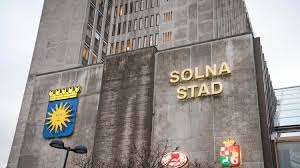
She therefore held a position of trust in handling financial matters for Solna that falls under the Penal Code’s definition of ”Breach of trust against a principal”. Solna District Court writes in the judgment that she abused her position of trust by deliberately transferring the money to her own accounts and thereby causing Solna significant damage.
Banks harass ordinary customers – but no one seems to have reacted to the large sums in the transfers
Curiously, none of the five banks where Ingela was a customer appears to have reacted to the large amounts in the transfers (90 000–500 000 kronor) – while there are increasing reports of ordinary, honest and conscientious bank customers being harassed by banks with questions about “customer due diligence” and unfounded suspicions of money laundering.
More and more bank customers in Sweden are having their payment accounts blocked or closed by the banks. The number of cases has increased markedly, from around 45 000 to nearly 60 000 in just two years. One reason is stricter EU directives.
All of this seems to have passed Ingela by. Which bank would dare to suspect payments from a large municipality made by a financial secretary who has done her job for decades?
In autumn 2023, Solna discovers suspicious payments totalling around 300,000 kronor from the city’s account to a private bank account belonging to Ingela. The transfers were reported to the police on 18 October 2023. By then, additional unlawful payments of around 4 million kronor had been identified, and Ingela was dismissed from her position. She has since got another job, 30 hours a week.
Ingela is sentenced by Solna District Court to three years in prison. She must pay damages to Solna of 18 758 400 kronor plus interest. She is now 60 years old and must sell her apartment, but will still be paying off her debt for the rest of her life.
————————————————————————-

